
In the dynamic world of film and television, where content is king, numerous challenges arise in the realm of international film and series copyright trade. As an experienced senior executive, you are well-acquainted with the complexities of this field. Strategic decisions in this arena demand not only deep legal knowledge but also keen business acumen and a nuanced understanding of global market dynamics.
Key Challenges in Global Content Licensing
Variable Global Laws
Navigating the ever-changing copyright laws across diverse territories and jurisdictions.
Valuation Opacity
Lack of transparency in accurately assessing the true market value of content assets.
Reliable Partnerships
Difficulty in identifying trustworthy, specialized, and capable partners for international deals.
Your Strategic Roadmap to Global Success
This page is more than just a guide; it’s a comprehensive and strategic roadmap designed for you to navigate global markets with precision, efficiency, and complete confidence. Our goal is to provide practical and specialized insights, enabling you to make informed decisions, successfully trade your content assets internationally, and achieve your ambitious objectives.
Navigating Complexity: A Step-by-Step Guide to International Film and TV Series Copyright Trading
The global entertainment industry is a dynamic arena of opportunities and challenges for trading intellectual property (IP) rights of cinematic and television works. Strategic managers and industry professionals well understand that navigating this complex landscape requires a deep comprehension of legal, commercial, and cultural processes. As a key decision-maker, aiming to optimize profitability and mitigate financial and legal risks, you are always seeking precise and practical information.
This comprehensive guide directly addresses your need for a practical and specialized framework in International film and TV series copyright trading. We aim to elucidate the step-by-step processes of buying and selling international film and TV series rights, from initial evaluation to complex contract closure, in a clear and operational manner. This content is specifically designed to bridge gaps in general guides, offering insights directly applicable to your company’s global strategy formulation.
Our goal is to empower you to successfully manage the Film copyright acquisition process and how to sell film rights internationally, emphasizing accuracy, efficiency, and comprehensive coverage of legal and commercial dimensions. This guide comprises three main phases, assisting you at every stage of this intricate process.
Phase 1: Preparation and Evaluation of Film and TV Series Copyrights
Before any action in the international market, a precise and thorough evaluation of the work’s copyright is the cornerstone of a successful deal. This crucial step ensures definitive and complete ownership of rights, preventing future legal disputes.
Initial Checklist for Phase 1:
Phase 2: Market Identification and Finding Suitable Business Partners
After ensuring the legal robustness of your asset, the next step is identifying target markets and finding reliable business partners. Platforms such as Rightika enable access to a curated global directory of verified buyers and distributors — streamlining this process significantly.
Identification Strategies: Analyzing market data, reviewing recent successes of similar works, and understanding content consumption trends in different regions will help you target the best markets for selling or acquiring rights. Focusing on markets with cultural alignment and high demand for your genre or content type can increase the chances of success.
Phase 3: Negotiation and Structuring International Copyright Contracts
This phase is the culmination of the rights trading process, where the financial, legal, and operational details of the deal are finalized. Intelligent negotiation and meticulous contract structuring are essential to fully cover your interests.
| Contract Type | Description | Advantages | Disadvantages | Application Cases |
|---|---|---|---|---|
| Outright Sale | Complete and permanent (or long-term) transfer of all rights to the buyer. | Significant upfront revenue and financial certainty. | Loss of future control and long-term revenue potential. | When quick liquidity is needed, or for older works. |
| Regional Licensing | Granting distribution rights in a specific territory for a limited period. | Retains control over other territories and opportunities for future revenue. | More complexity in rights management and requires multiple deals. | Maximizing global potential, market testing. |
| Platform Rights | License to distribute the work through digital platforms (VOD, SVOD). | Access to broad online audiences, regular platform income. | Dependency on platform terms, may restrict other rights. | Global distribution and leveraging digital market capacities. |
Valuation and Profit Optimization: Financial Strategies in International Copyright Trade
In the complex and dynamic world of the global entertainment industry, a deep understanding of entertainment intellectual property valuation and revenue stream optimization is crucial for strategic managers and decision-makers. International film and series copyright transactions are not merely limited to legal aspects; they require precise financial insight and smart business strategies. This section provides a comprehensive guide to understanding the true value of works, maximizing profits, and mitigating financial risks in the processes of acquiring, selling, and licensing rights in international markets.
For those in strategic positions who face the challenges of accurately assessing the commercial potential of a film or series across various markets, mastering the financial aspects of this trade is key to your company’s success and sustainable growth. Below, we will delve into key valuation models, revenue optimization approaches, and risk management strategies to help you navigate this competitive market with greater confidence.
Rightika supports flexible licensing models — from Minimum Guarantee (MG) agreements to revenue-share and hybrid models — allowing rights owners and buyers to tailor deals based on market conditions and risk appetite.
Valuation Models for Film and Series Rights in the Global Market
Determining the accurate value of film and series rights is an art as much as a science, requiring multifaceted analysis and the use of diverse valuation approaches. In the global market, three primary models are used for valuing entertainment intellectual property:
Income-Based Valuation
This method relies on forecasting future cash flows an asset can generate. Factors like past sales history (for franchises or similar works), market potential across different regions, the projected lifespan of the work, and the Discount Rate for calculating Net Present Value (NPV) are considered. This model is highly effective for works with clear and predictable revenue potential.
Market-Based Valuation
In this approach, valuation is conducted by comparing the asset in question with similar transactions recently completed in the market. This comparison includes parameters such as genre, production budget, presence of prominent talent (actors, directors), distribution platforms, and geographical regions of transactions. Access to transparent market transaction data is key to this method’s success.
Cost-Based Valuation
This model focuses on the costs incurred for producing or reproducing the work. Although less common for entertainment intellectual property (as the value of an artistic work often transcends its production cost), it can be useful in cases where market or revenue value is uncertain, or for insurance purposes.
Beyond the above models, several key factors influence the Valuation of entertainment intellectual property. For example, the reputation and past sales history of the director or main actors, the genre of the work (e.g., comedy, drama, sci-fi), market demand for that type of content in specific regions, and the potential for the work to become a multimedia franchise, all shape its value. A skilled analyst, considering all these dimensions, can arrive at a realistic estimate of the value of film or series rights.
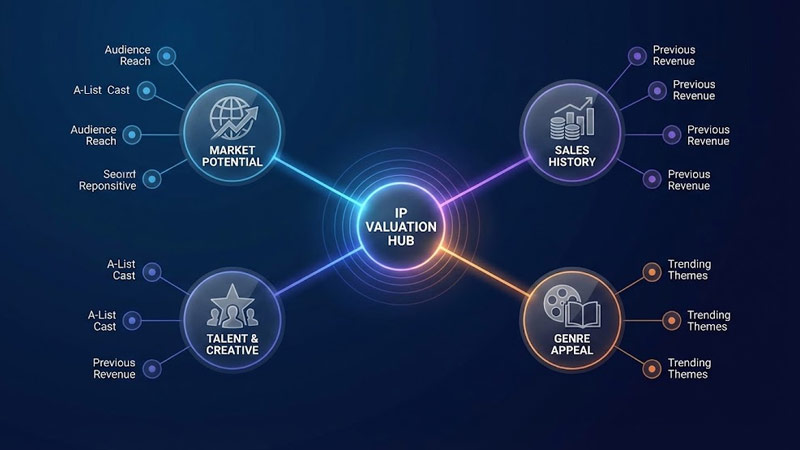
Factors Influencing Film and Series Copyright Value
Revenue Optimization: Exploring Business Models and Financial Structures
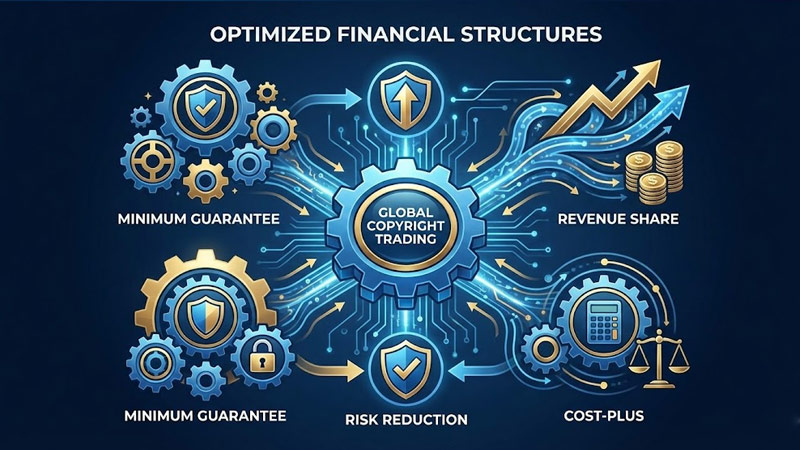
Choosing the right business model and optimal financial structure is the backbone of success in international copyright trade. A deep understanding of available options helps you craft agreements that maximize your company’s benefits and minimize risk. Common revenue models include:
Minimum Guarantee (MG)
In this model, the buyer (e.g., a distributor or streaming platform) pays a fixed upfront amount to the rights holder, regardless of the work’s actual market performance. This amount is typically paid in exchange for exclusive distribution rights in a specific territory for a defined period. MG reduces risk for the rights holder by providing guaranteed income but limits potential for higher earnings from significant success.
Revenue Share
In this structure, the rights holder and buyer agree to split a percentage of the net revenue generated from the work (after specified expenses). This model offers more flexibility, allowing the rights holder to benefit from the work’s significant success, but also carries the risk of underperformance.
Cost-Plus
In this model, the buyer pays the rights holder a specific profit percentage in addition to covering the costs of producing or acquiring the work. This method is more common in custom projects or co-productions where the buyer has greater control over the process.
The selection of the most optimal model should be based on the specific project, target market potential, risk tolerance of the parties, and your company’s strategic objectives. For example, if you seek guaranteed initial revenue and risk reduction, MG is suitable. If you believe in the high potential of the work and wish to share in its success, Revenue Share is a better option.
Hypothetical Example of a Revenue Share Structure:
Revenue Sharing Agreement:

Work Title: "Secrets of the Lost City"
Territory: Europe (EU)
Duration: 5 Years

Net Revenue Split:
- Distributor: 30% (for marketing, distribution, and administrative costs)
- Rights Holder: 70%

Definition of Net Revenue:
Total revenue from sales (e.g., ticket sales, platform subscriptions, DVD/Blu-ray sales) minus direct distribution costs (e.g., local taxes, bandwidth costs, platform fees).
Financial risk reduction strategies include payment guarantees, using stable currencies in contracts, and diversifying revenue models across different territories.
Managing Financial and Legal Risks in International Copyright Transactions
International copyright transactions come with a set of financial and legal risks that must be identified and managed to protect your company’s interests. Using a structured platform such as Rightika can reduce risks related to unreliable partners, unclear rights documentation, and cross-border deal execution, thanks to built-in verification processes and contract-management tools. Financial risks include currency rate fluctuations (which can impact the value of future payments), changes in tax laws across different countries, and issues related to liquidity and creditworthiness of business partners. To counter these risks, using currency hedging tools and thoroughly reviewing the financial records of the counterparty is recommended.
On the legal front, risks can include differences in copyright laws between countries, issues related to enforcement of rights in foreign territories, and the possibility of infringement by third parties. Therefore, drafting precise and professional contracts is paramount. Two vital clauses that should be included in every international copyright contract are:
Consulting with lawyers specialized in international copyright law is key to successfully managing these risks and ensuring the accuracy and enforceability of your contracts.
Think Globally, Act Locally: Legal and Commercial Distinctions in International Copyright Markets
In today’s world, where digital borders are rapidly blurring, new horizons for international trade in film and series rights are limitless. However, achieving success in this arena requires a deep understanding of the subtle legal, cultural, and commercial differences that distinguish each region of the world. As a seasoned executive in the entertainment industry, you know well that a one-size-fits-all strategy often means lost opportunities and facing unnecessary risks.
💡 Your Roadmap to Global Success
This section is designed to provide an operational roadmap for navigating the complexities of global film copyright legal aspects and acquiring TV series distribution rights. We help you make informed decisions, maximize the value of your intellectual property, and avoid legal and commercial pitfalls by equipping you with regional knowledge. This in-depth analysis directly addresses the challenge of “asymmetric geographical coverage” observed in competitive reviews and offers practical insights for success in key international markets.
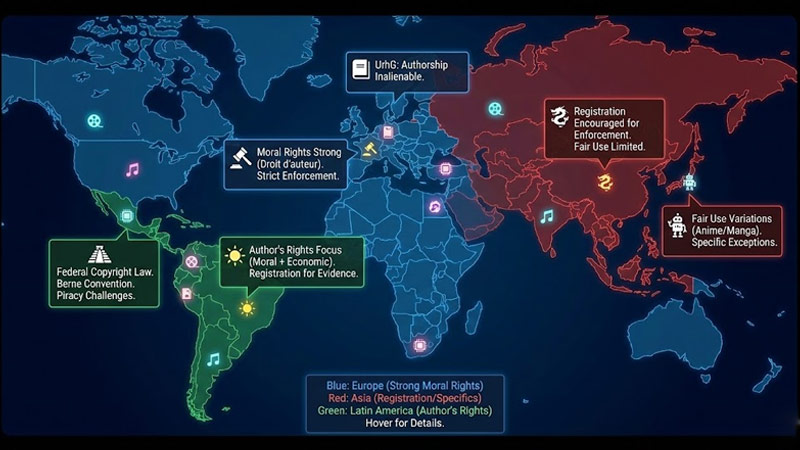
Overview of Copyright Laws in Key Regions: Europe, Asia, and Latin America
One of the most fundamental principles in international copyright law is the principle of territoriality; meaning copyright is granted and enforced based on the laws of the country where the work is protected. However, international treaties like the Berne Convention provide minimum standards for reciprocal protection. In practice, these regions have significant differences that can impact your international trade in film and series rights.
European Union (EU)
Despite efforts to harmonize laws through directives like the DSM Copyright Directive, significant differences exist in how laws are implemented and enforced across member states. For example, the concept of “Droit d’auteur” (author’s rights) in European countries often provides broader moral protections for creators than typically seen in the Anglo-Saxon “Copyright” system. Global film copyright legal aspects in Europe strongly emphasize author protection and fair revenue.
Asia
This continent encompasses a diverse set of legal systems:
Latin America
Countries in this region often follow civil law systems and the “author’s rights” concept, similar to Europe. Challenges can include more widespread piracy in some areas and the need for meticulous registration of rights in each country to ensure enforcement.
Understanding these regional differences is essential not only for protecting your assets but also for structuring the most optimal film copyright acquisition process and commercial negotiations. It is always recommended to seek specialized local legal advice before entering any new market.
Market Trends, Audience Tastes, and Dominant Platforms by Region
Beyond legal frameworks, the international trade in film and series rights is heavily influenced by market dynamics, audience cultural tastes, and the dominance of local streaming platforms. What gains significant popularity in one region might be less welcomed in another, directly impacting entertainment intellectual property valuation.
Europe
Despite a global content trend, demand for strong local dramas persists. Platforms like Netflix and Amazon Prime Video have a widespread presence, but national or regional platforms (e.g., Sky, Canal+) also hold significant market share.
Asia
Latin America
GloboPlay in Brazil, Blim TV in Mexico, and Telefe in Argentina are notable platforms competing with global players. Telenovelas, comedies, and social dramas are highly popular genres.
To succeed in acquiring TV series distribution rights or selling them, understanding these regional preferences and identifying key platforms that can provide the widest access to your target audience is crucial.
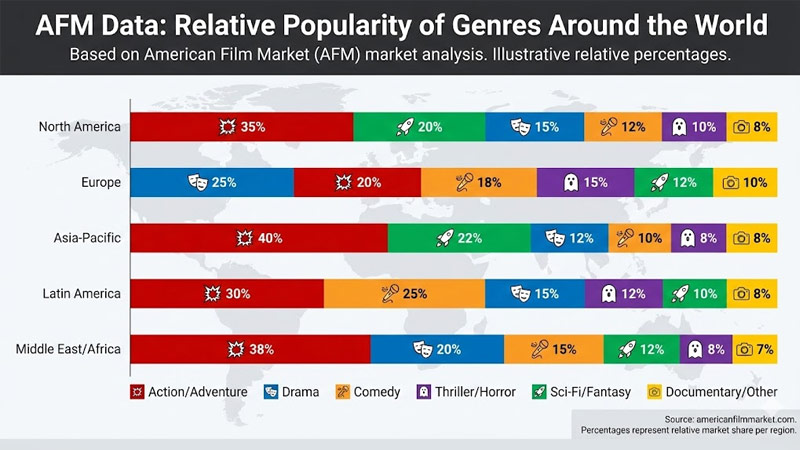
(Chart data for illustrative purposes only, actual data would be dynamically rendered.)
Cultural and Regulatory Challenges: Lessons for Successful Deals
Success in the international trade in film and series rights is not solely limited to understanding laws and market trends; cultural and regulatory challenges also play a vital role. Government censorship, content localization laws (e.g., minimum local content share in broadcasting), and specific regional cultural sensitivities can pose significant obstacles to your deals.
For example, content considered normal in the West might face severe restrictions in some Asian or Middle Eastern markets due to conflicts with social, ethical, or religious values. Global film copyright legal aspects and how to sell film rights internationally must be handled with these nuances in mind.
Lessons for Successful Deals:
The Executive’s Toolkit: Essential Checklists, Contract Templates & Specialized Glossary for Global Media Rights
In the complex and dynamic world of international film and series copyright trading, industry executives and specialists constantly face numerous legal, financial, and strategic challenges. As an experienced manager, you know well that even the slightest error in these global transactions can lead to irreversible consequences. To navigate these complexities successfully, you need precise and reliable tools that clarify processes and minimize risks.
This Executive’s Toolkit is specifically designed to address these critical needs. We have compiled a collection of practical and authoritative resources to assist you at every step of acquiring, selling, and licensing film and series rights in global markets. From initial preparations and intellectual property assessment to complex negotiations and contract execution, these tools equip you with the knowledge and documents necessary for informed and strategic decision-making. This comprehensive set includes detailed checklists, key contract clause samples, and a specialized glossary, enabling you to operate with greater confidence and efficiency in this competitive market. By utilizing these resources, you can optimize the process of film rights acquisition and TV rights trading, safeguarding your investments. These tools help you master the legal aspects of global film trade and understand the challenges of valuing entertainment intellectual property.Additionally, Rightika offers downloadable toolkit resources — including sample contracts, screener management templates, rights-tracking checklists, and a global buyer directory — to facilitate smooth international licensing workflows.
Comprehensive Checklists
Step-by-step guides to ensure no detail is overlooked in international copyright transactions.
Key Contract Templates
Essential clauses and structures for various licensing and rights transfer agreements, facilitating transparent drafting.
Specialized Glossary
A practical reference for common legal and commercial terms in the global entertainment industry.
Comprehensive Checklist for Pre, During, and Post-International Copyright Deals
Navigating the path of international film and series rights trading requires precision and comprehensive planning. This accessible and downloadable checklist serves as a step-by-step guide to ensure no detail is overlooked. From crucial pre-deal stages like meticulous legal ownership review and necessary documentation preparation, to complex processes during negotiation and contract signing. This checklist also includes key post-deal steps such as rights registration in various jurisdictions and monitoring contract clause implementation. This tool helps you minimize legal and financial risks with thorough organization and proceed with greater confidence in the process of acquiring TV series broadcasting rights or selling film rights in global markets.
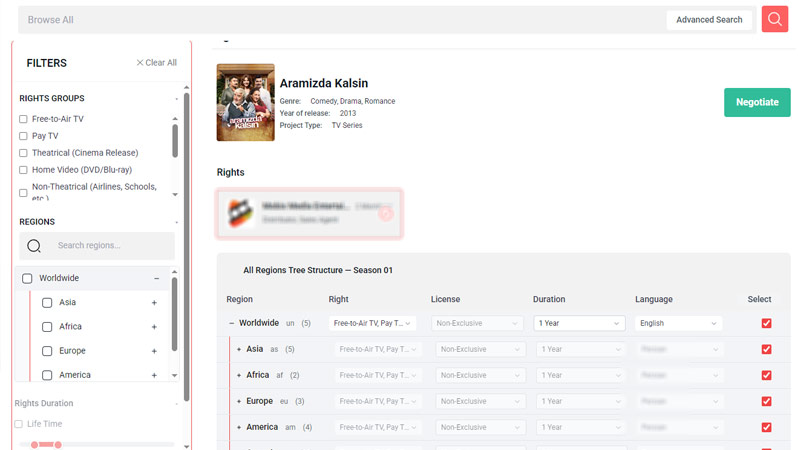
Beyond the checklist itself, you can streamline the entire workflow inside the Rightika Platform, where every type of copyright broadcast, VOD, theatrical, inflight, remake, digital, format, soundtrack, and more can be entered and categorized with full regional specifications. From defining the exact territories (exclusive or non-exclusive), languages, release windows, and media types to adding delivery materials, rights holders, chain-of-title documents, and contract expiration timelines, the system ensures buyers receive all critical data in a structured, transparent format. This allows content buyers to instantly filter, compare, and evaluate rights based on real, actionable metadata significantly reducing negotiation time and minimizing misunderstandings. With this level of clarity, both buyers and sellers move through international rights transactions with far greater speed, accuracy, and confidence.
Key Clauses for Licensing and Rights Transfer Agreements
One of the most critical stages in film rights acquisition and TV rights trading is drafting robust and transparent contracts. This section of the toolkit provides patterns for key clauses and fundamental structures for various types of licensing and rights transfer agreements. These clauses can help you better understand legal language and prepare initial drafts, covering topics such as geographical scope, duration, distribution rights, financial terms, and guarantees. However, please note that these samples are provided solely for educational and reference purposes. The legal aspects of global film trade are highly complex, and each transaction has its unique conditions.

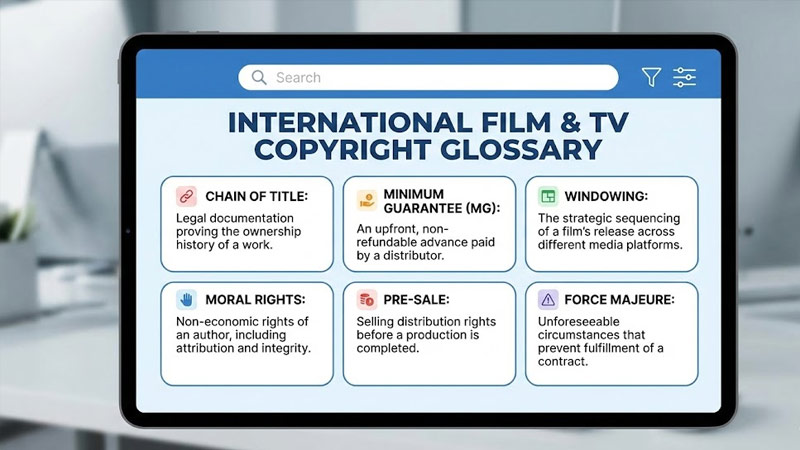
Glossary of Specialized Terms for International Copyright Trading
Understanding specialized vocabulary is the backbone of success in international film and series copyright trading. This comprehensive glossary is a practical reference for all common legal and commercial terms in the global entertainment industry that you will encounter in processes of international film rights sales, TV series distribution rights acquisition, and other legal transactions. From “global distribution rights” and “minimum guarantee” to “re-broadcast rights” and “territoriality of rights,” each term is provided with a concise and useful explanation. This resource helps you conduct negotiations with greater confidence and prevent potential misunderstandings by deepening your understanding of industry language. By using this glossary, you can master the complexities of international copyright laws and valuing entertainment intellectual property.
Lessons from the Field: Real-World Case Studies in International Film and TV Copyright Trading
In the complex and dynamic world of international film and TV series copyright trading, success often hinges on practical insights and lessons learned from real-world operations. Unlike theoretical content primarily focused on legal frameworks, executives and strategists seek tangible experiences and proven solutions to navigate the Film and TV rights marketplaces.
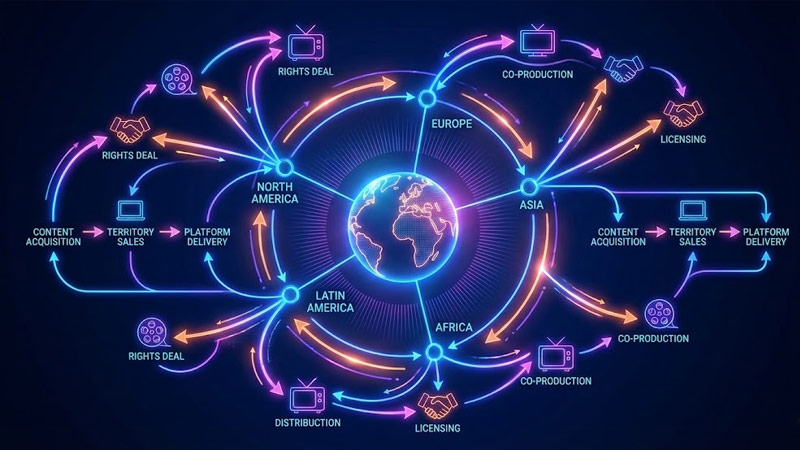
This section aims to bridge that gap by providing an in-depth analysis of several actual case studies. Each story not only illustrates the complexities and opportunities within International film and TV series copyright trading, but also offers invaluable lessons in strategy, negotiation, legal challenges, and achieving profitability in global markets. As an experienced professional in this industry, by examining these examples, you can gain a deeper understanding of the processes involved in buying, selling, and licensing content rights. This knowledge will enable you to refine your company’s strategies for optimizing the valuation of entertainment intellectual property and mitigating potential risks. This practical approach serves as a powerful tool for informed decision-making and continuous progress in an ever-evolving market.
Case Study 1: Success in Licensing a Drama Series to the Asian Market
This case study examines “Arya Pictures'” remarkable success in licensing the drama series “Broken Bridges” to the South Korean television market. Initially produced for a domestic audience, the series achieved international acclaim through a clever strategy.
Annual Revenue Growth of “Broken Bridges” in the Asian Market
Year 2
Year 3
Year 4
Year 5
Case Study 2: Challenges in Selling Rights of an Independent Film in Latin America
The small company “Independent Dreamers,” aiming to sell film rights internationally for their independent film “Forgotten Shadows,” encountered unexpected challenges in the Latin American market.

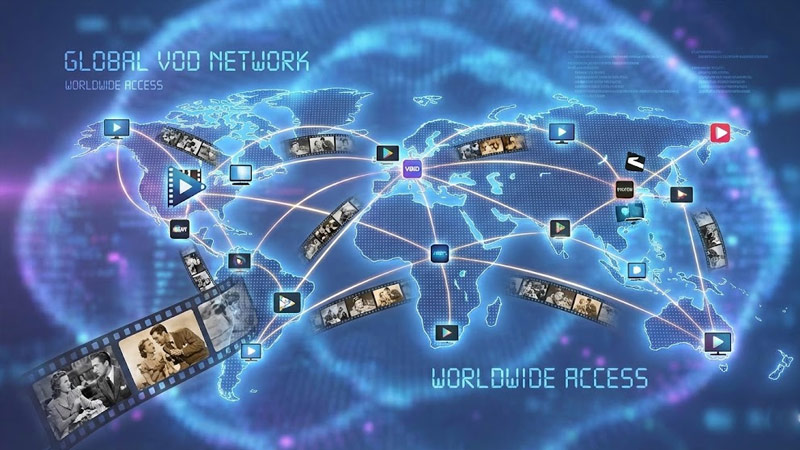
Case Study 3: Optimizing Film Catalog Rights Sales on Global VOD Platforms
“Golden Archive,” a company owning a vast collection of classic and older films, sought strategies to optimize the International film and TV series copyright trading of its catalog in the era of global VOD platforms.
Revolutionize Your Global Trade Strategy: Free Expert Consultation
In the complex world of international film and series copyright trade, strategic decisions require a deep understanding of evolving laws, precise asset valuation, and the identification of hidden opportunities. You, as an experienced manager, face countless challenges in the path of buying and selling film rights and global licensing.
Strategic Insights
Master evolving international laws, accurately value assets, and uncover hidden opportunities in entertainment copyright trade.
Risk & Profit Optimization
Gain specialized insights to achieve peak profitability while effectively mitigating legal and financial exposures.
Confident Global Circulation
With a comprehensive understanding of market complexities, confidently and efficiently circulate your intellectual assets worldwide.
Chart Your Path to Success
This page offers the roadmap you need for unparalleled success in the challenging field of global entertainment rights.
Frequently Asked Questions about International Film and TV Copyright Trading
Navigating the complex and evolving world of international film and TV copyright trading requires specialized knowledge and precise guidance. As an experienced executive in the entertainment industry, you seek to optimize profits, mitigate legal and financial risks, and gain a deep understanding of the processes for buying, selling, and licensing rights across various markets. In this section, we address some of the most common and critical questions and concerns you may encounter when managing international intellectual property assets, enabling you to make informed and strategic decisions for your company.
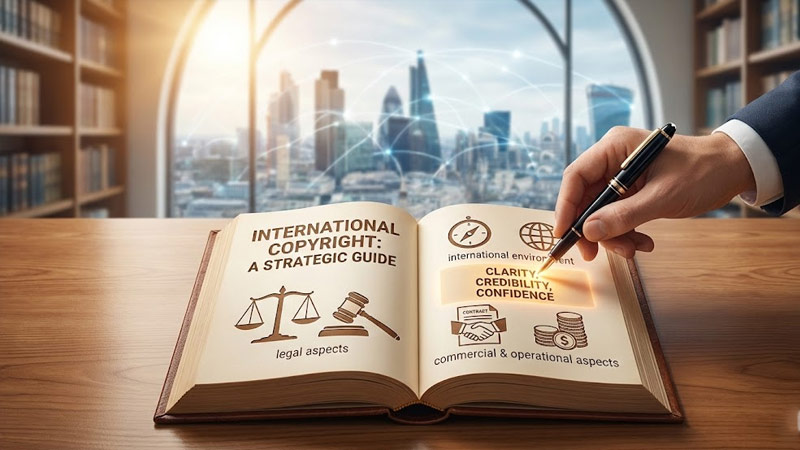
By addressing legal, commercial, and operational aspects, our goal is to provide clarity and credibility in this vital field. This guide will help you step with greater confidence into the international copyright environment.
📝
Is it necessary to register copyright in every country for international transactions?
Generally, no. According to the Berne Convention, creative works are automatically protected by copyright upon creation in all member countries (which include the majority of the world’s nations), without the need for formal registration in each country. However, registering rights in some countries (such as the United States) can offer significant practical and procedural advantages for copyright enforcement and recovering higher damages in case of legal disputes.
💰📈
How can one assess the true value of film or TV series copyright?
Assessing the true value of film or TV series copyright is a complex process. Key factors include genre, production quality, cast and crew reputation, historical performance, commercial potential across platforms, and the legal validity of the work. Analyzing regional demand and opportunities for licensing and distribution is also crucial. To optimize profits in international film and TV copyright trading, consulting with valuation specialists and financial-legal industry advisors is essential.
Key Aspects of International Copyright Trading
Need Expert Consultation?
By leveraging platforms like Rightika, rights owners and buyers can benefit from a centralized, secure, and transparent ecosystem — streamlining rights verification, contract negotiation, screener delivery, and worldwide distribution.
Our team of international copyright specialists is ready to assist you. Contact us today for personalized advice.
